Budidaya Sayuran Organik di Halaman Rumah

Budidaya Sayuran Organik di Halaman Rumah

Peter Pepper Most Porn Plants in The World

ZonaOrganik.Com - Peter Pepper Most Porn Plants in The World - Organic Gardening - Growing Vegetables Organically - Chili which has the scientific name is Capsicum annuum var annuum found in Louisiana and Texas, United States (US). This chili is so famous all over the world is not as spicy, but very well-known because of its shape like a penis. Peter chili spiciness level is only around 5.000 to 30.000 SHU, equivalent to the usual red pepper pungency.

Because it is so strange and unique shape, one of the magazines in the US dub this chili as most porn plants in the world. Could you imagine if we sell chili like this on the market.

This is a unique and whimsical chili, Peter Pepper. Some say it is hot and sexy. Some say it was spicy. Others say it was delicious. No matter who you are, you will agree it is the most interesting chilli in the world. One chillies used to make every cook, and give the impression, gifts, opportunities, and experiences that appeal to that enjoyed it.

The Story of the Peter Pepper

The fiery little Peter Peppers has long been Considered too hot to eat! Native to Louisiana and Texas, this blistering capsicum pods roomates forms naturally and consistently Themselves contort into a miniature replica of, well - take a look at its scientific name: Capsicum annuum var. annuum 'Peter' (Penis Pepper).

Peter Pepper Most Porn Plants in The World

Reviews These are interesting peppers certainly a conversation piece for the gardener who has everything! Seeds are almost impossible to Obtain, and most plants are grown from the much coveted "private stock" - plants grown year after year for seeds alone.

Actually, the word pepper can be confusing here. The familiar black or white pepper is a product of Piper nigrum and that is an entirely different plant! This chili belong to the genus Capsicum. The name comes from the Greek Capsicum kapto, to bite, an allusion to the hot, biting taste of the fruits. Capsicums Some are sweet, some are hot, others are mild, and they all have unique shapes and culinary uses. Famous cousins ​​of the Peter Pepper include the tabasco pepper and the jalapeno. However, Those chilies are hotter than the Tabasco and at least 10 times hotter than the jalapeno.

Papa Jeabert's Founder:

The founder of Papa Jeabert's, Inc., Phil Gremillion was born and raised in the heart of Cajun country - Lafayette, Louisiana, and Grew This chili in his back yard from seeds given to him by his father.

Little is known about the commercial cultivation of this chili because It has always been grown as an ornamental. Papa Jeabert's was the first to grow this chili for commercial purposes. The first successful commercial field of Peter Peppers was grown by Papa Jeabert's nursery under shade cloth to protect the pepper plants from the sun.

Today the peppers are still grown under shade cloth, with the growing season lasting from late March through early October. A typical field MIGHT have 2,000 plants, set about 16 inches apart. Peter Pepper Each plant produces approximately 100 hot little peppers.

Everybody cooks in Phil Gremillion's hometown of Lafayette. In fact, the area is known for its good food and "joie de vivre" - love of life! With a bumper crop of Peter Peppers at his backdoor, Phil experimented with his own spice blend made from dried and crushed Peter Peppers. When he Gave bottles of the blend to friends and relatives, they were Immediately hooked on its delicious and different taste. Soon it was obvious that Phil had the seed of a hot business.

In 1995, the local press ran a story on this new business, describing Phil Gremillion as the man who tamed the hottest of the peppers.

Read more at: http://www.peterpeppers.com/Peter_Peppers/peter_peppers.htm

We plant Peter Peppers organically. We do not use chemical pesticides and prefer organic pest control and the use of predatory insects.

Trinidad Scorpion Butch Taylor

ZonaOrganik.Com - Organic Gardening - Growing Chili Organically - Trinidad Scorpion Butch Taylor - How does it feel stung by a scorpion? Such was the spicy chili Trinidad Scorpion. Trinidad Scorpion is derived from the Caribbean island of Trinidad in the Northeast of Venezuela. This chili hotter than Bhut Jolokia and Naga Chilli.

Varian Trinidad Scorpion Butch Taylor is the holder of the Guinness World Record at the end of March 2011 as the world's hottest chilli pungency level 1,460,000 SHU (Scoville Heat Units).

Compare this with the usual chili which only about 60,000 SHU!

The Trinidad scorpion 'Butch T' pepper is a Capsicum chinense cultivar that is among the most piquant peppers.

It is derived from the Trinidad scorpion, which is indigenous to Trinidad and Tobago. It was named by Neil Smith from The Hippy Seed Company, after he got the seeds originally from Butch Taylor, the owner of Zydeco Farms in Woodville/Crosby, Mississippi, and a hot sauce company, who is responsible for propagating the pepper's seeds.

Trinidad Scorpion Butch Taylor

The "scorpion" peppers are referred to as such because the pointed end of the pepper is said to resemble a scorpion's stinger.

The Trinidad scorpion Butch Taylor pepper was, for three years, ranked as the most pungent ("hot") pepper in the world, according to Guinness World Records. A laboratory test conducted in March 2011 measured a specimen at 1,463,700 Scoville heat units, officially ranking it the hottest pepper in the world at that time.

In 2012, Guinness World Records recognized the Carolina Reaper as the hottest pepper in the world, peaking at approximately 2,200,000 SHU. The secret to the heat, according to the creators, is fertilizing the soil with the liquid runoff of a worm farm.


We plant Trinidad Scorpion Butch Taylor organically. We do not use chemical pesticides and prefer organic pest control and the use of predatory insects.

How to Grow Black Hungarian Pepper?

ZonaOrganik.Com - Organic Gardening - Growing Vegetables Organically - How to Grow Black Hungarian Pepper? - Black Hungarian Pepper is a cool chili. 75 days. Unique, black-colored fruit that are the shape of a Jalapeno. They are mildly hot and have a delicious flavor. The tall plants have beautiful purple flowers that make this variety very ornamental. Rare and colorful!

Black Hungarian peppers gradually become darker and darker as the mature, starting at roughly 70 days after transplanting.  At maturity, they are deep red or nearly black.  The pepper pods grow to 4 inches long, and a good choice for fresh dishes like salsa.  The heat is relatively mild on these peppers, typically 2500 Scoville units or less.  Black Hungarian pepper plants can grow to a height of about 2 feet, with lovely dark purple blossoms.

Pepper should be started indoor approximately 8 weeks prior to the last frost of the spring.

Sow ¼" deep in a well-drained starting medium. Seeds require lots of warm to germinate; medium should be between 80-85 degrees F. Using a heat mat, available at home and garden store and elsewhere, can help to ensure ideal conditions. Additionally, young starts will fare much better with additional light. Place in a window or sunny location that receives lots of southern or southwestern sun exposure. Consider supplementing with artificial lighting if possible.

How to Grow Black Hungarian Pepper?

Set plants out 2 to 3 weeks after average last frost when the soil has warmed and the weather has settled. Peppers can be temperamental when it comes to setting fruit if temperatures are too hot or too cool. Nighttime temperatures below 60 F or above 75 F can reduce fruit set.

Plant them 12 to 24 inches apart, in rows 24 to 36 inches apart, or spaced about 14 to 16 inches apart in raised beds. Do not rush to transplant your starts outdoors. Select a location that receives plenty of light and heat, and has not been used for tomatoes, potatoes or other members of this family for several years. Peppers will do best with soil that is fertile, lightweight, slightly acidic (pH5.5-7.0) and well-drained.

Wait until soil temperatures exceed 50 degrees F at all times before placing into the ground. Pepper plants should be fairly close to one another, so that there is slight contact between plants.

Black Hungarian Peppers need a steady supply of water for best performance. If fertilizing, be careful not to overdo it on nitrogen as this can deter fruit growth. Organic fertilizers and soil should be rich in phosphorus, potassium and calcium.

Mulching with black plastic or similar material is a good way to maintain heat and soil moisture. Additionally, floating row covers over your beds can help to protect against cold early in the growing season. Use caution with row covers not to overheat plants and cause them to drop their blossoms.

Stake tall varieties for earlier and heavier harvest.

Peppers will turn green when starting to approach maturity. They can be harvested at this point, or allowed to ripen on the plant. If collected early, plants will continue to flower and fruit more frequently, though this early collection might result in differences in flavor if using fresh.

Use a scissors or snip to cut branches and harvest peppers. Do not remove by hand as plants can be easily damaged.

The shelf life of your chili peppers can be extended many times over by drying your peppers and storing them in an airtight container. To expedite the process, a home food dehydrator can be used to safely take the moisture out of your peppers. Otherwise, place your fresh peppers onto a cookie sheet and 'baking' at the lowest setting (approximately 150F or lower)with the oven for several hours to gradually dry out the peppers. Turn peppers frequently, and make sure peppers are not being overheated.

If neither a food dehydrator or oven is available, peppers can be dried naturally in the sun or even in a well-lit window. This process may take several days, even with hot dry conditions. Peppers can be placed on a flat surface in a sunny location. Turn periodically to ensure that they dry out evenly. Once peppers are slightly brittle and tough, they can be stored in airtight containers and saved for future use.

Cut your favorite variety of pepper in half. All of the seeds inside are most likely viable and you can use them to grow the same variety of pepper in containers or in a sunny garden spot. Collect the seeds and lay them flat on a paper towel for 24 hours.

Label the plastic bag with the permanent marker with the name or variety of the pepper seeds. Place the seeds inside for planting.

Keep the seeds in a cool, but not cold, dark area until you are ready to start them in early spring.


We plant Black Hungarian organically. We do not use chemical pesticides and prefer organic pest control and the use of predatory insects.

Chocolate Bhut Jolokia Unique Exotic

ZonaOrganik.Com - Chocolate Bhut Jolokia Unique and Exotic - Bhut Jolokia chili is one of the hottest in the world. This chili was recorded in the Guinness World Records in 2007 as the hottest chili, although then the record is broken by some other kinds of peppers.

Bhut Jolokia has a pungency level exceeding 1 million SHU (Scoville Heat Units) compared with the usual chili spiciness that only have 50000-100000 SHU.

Same with Bhut Jolokia red and yellow, Bhut Jolokia Chocolate is one of the hottest chilli in the world, after trinidad scorpion and carolina reaper. The same level of spiciness, but the colors are different. Unique and exotic brown color so it is more attractive.

Bhut Jolokia Purple and White color having the color only when immature, when mature they will be red. Unlike the Bhut Jolokia Chocolate brown when ripe will.

Until 2011 this was the hottest pepper in the world! With between 800,000 Scoville Units ~ 1.0013 million you can call this nuclear pepper. One drop of this pepper extract needs from one million drops of water to no longer be perceived as sharp. This chili pepper is a Whopping 125 times hotter than a Jalapeno!

Chocolate Bhut Jolokia Unique Exotic

This pepper originates from north-eastern India, par- ticularly Assam, Nagaland and Manipur. Bhut Jolokia (or Naga Jolokia) is twice as hot as the previous champ, the Red Savina, and was recorded in the Guinness Book of Records as the world's hottest pepper. The plants can grow up to 45-120 cm. The pods are 5 to 8.5 cm in length and 2.5 to 3 cm in width.

The Bhut Jolokia loves heat and humidity, but with a little extra care and love it will grow well in a cooler climate. Germination time is similar to the Habanero peppers, so it will take longer than others. Do not despair if you do not see anything after 3 weeks! The Bhut Jolokia has a long growing season. From this species it is known that some flowers of the plant can fall off.

Bhut Jolokia Chocolate is a rare, natural variant of Bhut Jolokia Red. It has all the characteristics of the Bhut Jolokia Red, but is much sweeter and delicious.

The Chocolate Bhut Jolokia is a wild strain found by Frontal Agritech India in Assam. The plant grows to between 1 to 2 meters. The delicious looking chilli pods are 5-8 cm long and 2-3 cm wide. The Chocolate Bhut Jolokia is an outstanding looking plant and grows well in a pot or in the ground.

The Chocolate Bhut Jolokia is as hot as the Bhut Jolokia, that was the world hottest chilli for years, and before that it was the Red Savina Habanero.

Flavour Wise: It taste as a Bhut Jolokia, but unfortunately not like dark chocolate.

Read also Dark Purple Chili

We plant Chocolate Bhut Jolokia organically. We do not use chemical pesticides and prefer organic pest control and the use of predatory insects.

Peach Habanero The Pretty Chili

Peach Habanero is the pepper plants from the Caribbean whose height is only about 50 cm. Peach fruit when it has matured. Length exceeding habanero fruit in general. Peach Habanero has a high spiciness, and has a unique fruit flavor. This chili can be harvested 100 days after planting.

The Peach Habanero is another variety with a pretty peach color. They are high-producing, compact plants that are great for growing inside, and can Brighten a room or office with Reviews their colorful, eye-watering but, fruits.

Habanero Peach is a compact plant, around 50 cm tall. It's high yielding. Peppers are peach-colored when mature. They are longer than mostHabanero's, have a nice fruity flavor and are very hot. This variety originates from the Caribbean. Harvest: 100 days after repotting.

(Capsicum chinense) Beautiful peach-colored peppers borne in Profusion on 18 "plants. From the SSE member James Weaver of Kutztown, Pennsylvania. Our favorite habanero for container growing. 95-100 days from transplant. VERY HOT.

Peach Habanero The Pretty Chili

How to plant Peach Habanero:

Sow seeds indoors ¼ "deep. Peppers germinate best in warm soil, so gentle bottom heat may be helpfull until seedlings emerge. Wait to transplant outdoors until soil is warm.

  1. Start indoors 8 weeks before last frost.

  2. Germination in 14 Days.

  3. Plant outdoors when the plant reaches a height of 12-24 ".

  4. The Peach Habanero need light full sun to optimal growth.


We plant Peach Habanero The Pretty Chili organically. We do not use chemical pesticides and prefer organic pest control and the use of predatory insects.

Naga Morich Hottest Peppers in The World

ZonaOrganik.Com - Naga Morich Hottest Peppers in The World - Naga Morich is known as one of the hottest peppers in the world. This chili is the brother of Bhut Jolokia. The shape is similar to the Bhut Jolokia, but it looks like it has a tail on the end of the fruit.

Naga Morich is a close relative of Dorset Naga. The chili came from North-East India. Naga Morich Hottest Peppers in the World is also known from Bangladesh.

Naga Morich has spread to the United States, Britain, and Australia were used as the main ingredient manufacture spicy sauce. If a visit to Finland, you will find many types of chili is sold in fresh condition at the supermarket.

Naga Morich Hottest Peppers in The World has a spicy flavor and unique because of slightly sweet.

Naga Morich is known as one type megascovile very spicy chili in the world. Measured in scala scoville (chili spiciness scale) ranges from 661 451 SHU for the green ones, up to 1.03231 million SHU for ripe fruit is harvested, it is much higher many times higher than the level of spiciness of chili pepper that only about 100000-300000 SHU. Spicy chili is not without reason because this type is a close relative of Bhut Jolokia chili or Ghost Pepper or Chili Devil who holds the record for the hottest in the world in repeatedly several years ago.

Naga Morich Hottest Peppers in The World

Naga Morich, still like his brother Bhut Jolokia, chilli classified as highly productive and able to produce hundreds of fruit per tree at a time. The fruit begins from the green, then gradually becoming orange, and finally red when ripe perfect. Chili length is slightly smaller than the Bhut Jolokia, approximately 6 cm, with a diameter of about 1 cm 2 cm.

The strength of spicy chili is apparently a major impact on the food industry around the world because they do not need anymore chilli in considerable numbers, but enough with the Naga Morich few have been able to make appropriate food to be very spicy spicy taste desired.

The Naga Morich or Dorset Naga is one of the hottest peppers in the world! With around 1,000,000 Scoville Units you could call this pepper "nuclear".  Even there are 1,598,227 Scoville units measured in Naga Morich pods! That is four times as hot as the former World champion, the Red Saviana. Naga Morich means 'snake or serpent Chile’. This chili is almost like snake venom, as some people say! One drop of extract from this pepper needs more than one million drops of water to no longer be perceived as pungent anymore. The Naga Morich and its cousin Bhut Jolokia from India are closely related. The pods color from green to yellow and end up red. After repotting it takes about 120 days before the peppers are mature. The plant can grow to 1 meter in height.

The Naga Morich, closely related to the Bhut jolokia, is a chilli pepper cultivated in Bangladesh and North East India. It is mostly very similar to Bhut Jolokia, or Ghost Chilli. In UK it is called Dorset nag which is originally from Bangladesh. It is one of the hottest known chili peppers.

Like many varieties of the Chinense species, the Naga Morich is a small to medium shrub with large leaves, small, five-petaled flowers, and blisteringly hot fruit. It differs to the Bhut Jolokia and Bih Jolokia in that the pods are slightly smaller with a pimply ribbed texture as opposed to the smoother flesh of the other two varieties.

The plants are cultivated in North East India and Bangladesh. They are also grown in the USA, United Kingdom (as subspecies Dorset Naga) and Australia for the production of hot sauces, and in Finland, where it is mainly sold fresh in supermarkets.

The Naga Morich chilli is extremely hot, but has a flavor that is quite unique. Like the Bhut Jolokia (Ghost Pepper), it has a sweet and slightly tart flavor, followed by slight undertones of woody, smoky flavors. The chili is traditionally used green by the Bangladeshis, often eaten raw as a side dish. It is well suited for BBQ and grilling due to its unique flavor profile.

This pepper is extremely hot! Use plastic gloves when handling this pepper. Use is entirely at your own risk


We plant Naga Morich Hottest Peppers in The World organically. We do not use chemical pesticides and prefer organic pest control and the use of predatory insects.
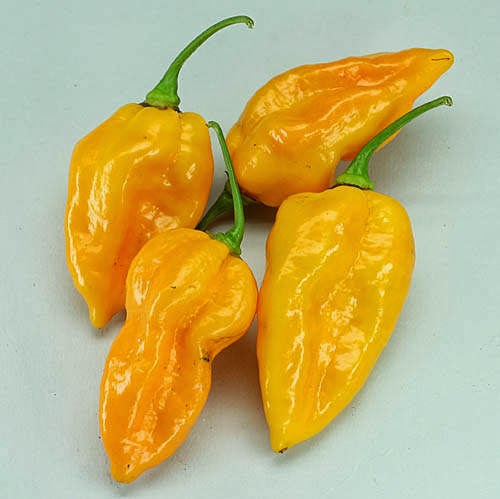
Dorset Naga hottest chillies in the world

ZonaOrganik.Com - Dorset Naga hottest chillies in the world - Dorset Naga is one of the hottest chillies in the world, capable of reaching a million Scoville Heat Units and more. The scorching heat of the fruit is combined with a distinctive fruity aroma, making this a truly exceptional chilli.

The wrinkled, wedge-shaped fruit ripen from green to red, and can be harvested at either stage of maturity. They can be up to 30 x 50mm in size, but can be smaller when the plants are grown in pots.

The plants are tall and ungainly, and when grown in the ground and given plenty of light, they can reach 1.5m or more. When grown in pots, however, their height can be considerably reduced.

Dorset Naga hottest chillies in the world

Approximate heat level: 544,000–1,221,000 SHU

Dorset Naga (Capsicum chinensis) is superhot chilli, origianlly selected from the Bangladeshi chilli, naga morich.

The heat level has ranged from 661,451 SHU for green fruit in 2007, up to 1,032,310 SHU for ripe fruit harvested in 2009.

Dorset Naga displays the typical characteristics of Capsicum chinense: slow germination; large, soft, slightly pale green leaves; multiple flowers per node; greenish petals; annular constriction; late maturing fruit; and floral aroma of the fruit.

In addition, Dorset Naga displays its own varietal characteristics. The plants are robust, consistently growing to a height of 1.5m or more. They are bushy, producing many branches from the base.

The fruit start green, and ripen to a red colour. They are wedge-shaped, with three locules and often a nipple at the end. Although some can be quite small, the fruit are generally 4-5 cm long and 3-4 cm wide at the shoulders. Larger fruit can be up to 6 cm long. The skin is finely wrinkled, and the flesh is thin. The most significant feature of Dorset Naga, however, is its extreme pungency, which makes it a contender for the title of ‘hottest chilli in the world’.


We plant Dorset Naga organically. We do not use chemical pesticides and prefer organic pest control and the use of predatory insects.

Yellow Devils Tongue

ZonaOrganik.Com - Organik Gardening - Growing vegetables organically - Yellow Devils Tongue - One again, ornamental chili seeds we sow was, Yellow Devils Tongue. This unique chili yellow and rather wrinkled skin, but has a biting pungency.

The Yellow Devils Tongue is a Capsicum Chinenese from unknown origin. Unfortunately we don’t have a lot information about the beautiful habanero variety. The plant grows to about a metre in pot and would probably grow bigger if you plant it in the ground. The pods are around 10 cm long and 3 cm wide and look very similar to the Fatali and often confused for. The Yellow Devils Tongue is a good producer and it’s one of our favourites.

Yellow Devils Tongue

An awesome habanero type with cool looking yellow pods. Really hot with a nice sweet flavour.

The yellow devil’s tongue pepper is very rare. It is not always known by even the most dedicated chili head. This kit makes a great gift and a fantastic surprise as chances are the recipient has never heard of this rare yellow treat.

The Devil’s Tongue pepper is a bit of a mystery. It was discovered growing alongside habanero in Pennsylvania. Although it is likely a cross between habanero and an unknown pollinator, nobody is really sure. Despite being related to habanero, the devil’s tongue pepper is a unique cultivar which reaches more than 325,000 SHU. That is as much as 130 times as hot as Jalapeno.


We grow Yellow Devils Tongue organically. We do not use chemical pesticides and prefer organic pest control and the use of predatory insects.

Chupentinho Unique Chili from Brazil

ZonaOrganik.Com - Chupentinho Unique Chili from Brazil - Chupentinho chili thought to have come from Brazil, has the shape of an eccentric. This chili has another name Biquinhi, belonging to the species Capsicum chinense Jacquin with pungency level range 20000-30000 Scoville Heat Units.

Chupetinho chili favored by many hobbyists because of the unique chili unsightly, fruitful and inclusive climate and pest resistant. Yellowish green to orange when young and finally red when ripe.

This unique chili very beautiful when planted in the garden or even in pots. really very beautiful, because of its unique shape.

How to plant Chupentinho pepper Unique Chili from Brazil:

Chupentinho Unique Chili from Brazil

  1. Soak the seeds in water about 1-2 hours.

  2. Seeding the seeds on the planting medium that has been prepared with a depth of 0.5 to 1 cm. Wet with clean water.

  3. Cover with black plastic nursery pot so that the seed is experiencing conditions of total darkness that will help germination.

  4. Move the plants when leaves 4-6 strands.

  5. Fertilization can be done when the plants are 3-4 weeks old.


We grow Chupentinho pepper organically. We do not use chemical pesticides and prefer organic pest control and the use of predatory insects.

Candle Light Suitable Ornamental Chili

ZonaOrganik.Com - Candle Light Suitable Ornamental Chili - Capsicum annuum Candlelight is one type of dwarf ornamental pepper. Suitable for planting in pots and decorate your home. In outdoor or even chili wax your yard looks very unique and distinctive. It would be beautiful if planted in groups.

This chili peppers adaptive in Indonesia and is very productive. The fruit is ripe and perfectly suited to meet the needs of cultivated cooking in the kitchen, just planting one then had the problem sorted out chili in the kitchen.

When young chilli, yellow-white Candle Light turns into orange and red when ripe. This same sense of chili with spicy chili sauce, or around 300,000 SHU.

Candle Light Suitable Ornamental Chili

Candle Light is suitable as an ornamental chili (in addition to the fruit can be eaten) because it has a uniform fruit like a collection of lighted candles. Capsicum annuum is one type of dwarf ornamental pepper. Candle Light is suitable planted in pots to decorate the front porch. The unique shape will look more beautiful when planted in groups.

Candle Light, but can be made sauce, chili can also be used as an ornamental plant. because when these coincide fruitful chili and soars upwards, can be seen as a picture.

When young Candle Light yellowish white turns into orange and red when ripe.


We grow this chili organically. We do not use chemical pesticides and prefer organic pest control and the use of predatory insects.
Copyright © 2015. Zona Organik - All Rights Reserved
Template Editing by Zona Organik